How do you organize weights and accessories so a luxury home gym still looks uncluttered?
Storage is what separates a designed room from a well equipped garage. Giving every plate, band, and towel a defined home protects the equipment and keeps the space calm enough to want to train in.
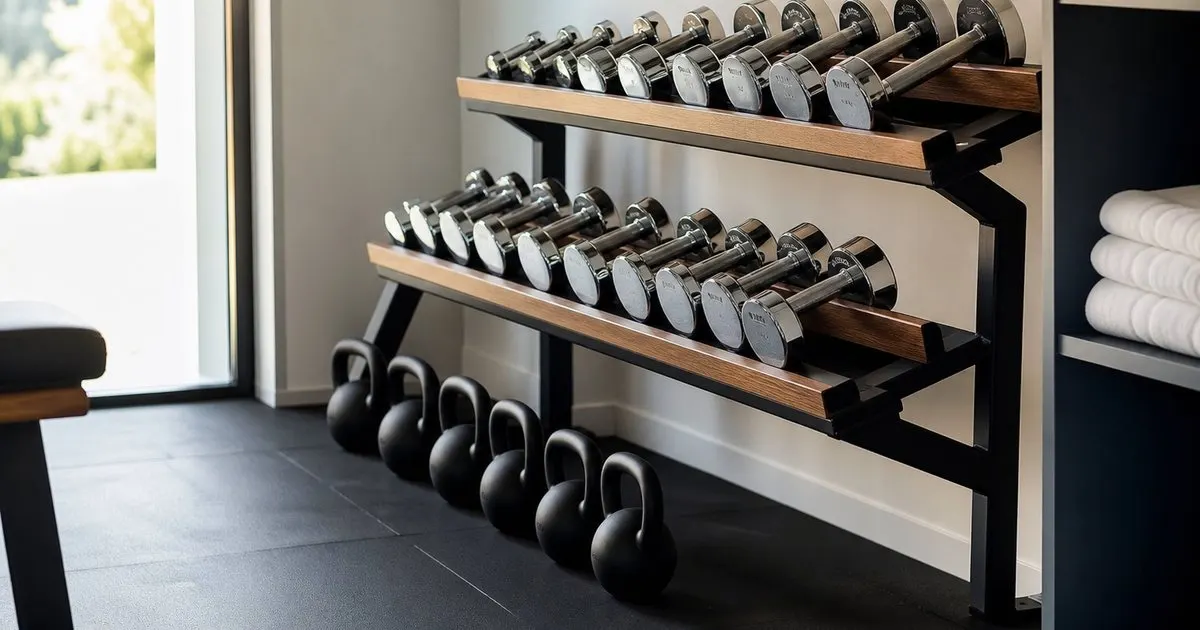
Start by Editing, Not by Buying More Storage
The fastest route to a room that looks expensive is owning fewer things and giving each of them a place. Most gyms accumulate a sediment layer of accessories bought for one program and never touched again: a second set of light dumbbells, four foam rollers, a knot of resistance bands, three pairs of gloves. Before specifying a single rack, lay the entire collection out on the floor and sort it into what gets used weekly, what gets used monthly, and what has not been picked up in a year. That final pile belongs somewhere else in the house, or out of it entirely.
What survives the edit should then be counted and measured, so storage is matched to a real inventory rather than to a vague feeling. Ten pairs of dumbbells require a specific rack length. A set of bumper plates requires a known number of pegs or a tree of known height. Buying storage before this exercise is exactly how owners end up with a handsome rack that swallows two thirds of the collection while the remainder lives on the floor beside it, which is precisely the look the purchase was meant to prevent. Related: How much floor space does a complete luxury home gym require?
Keep reading: How much floor space does a complete luxury home gym require?, Which flooring protects both your equipment and your foundation best?, What equipment forms the foundation of a serious home gym?. See how Gymholm helps you the expert guide to designing a premium home gym.
Choose Storage Rated for the Load, Not for the Photograph
Weight storage is structural equipment rather than furniture, and it deserves to be specified that way. A dumbbell rack carrying a full set concentrates several hundred pounds onto a small footprint, and a loaded plate tree behaves much the same. Look for welded steel frames, a stated load rating from the maker, and pegs or cradles dimensioned for the hardware you actually own, since plate diameters and dumbbell handle spacing vary between manufacturers. Powder coated finishes survive repeated steel on steel contact considerably better than sprayed paint, which chips at every contact point within months.
Wall mounted storage frees the floor and photographs beautifully, but it transfers the entire load into the structure of the house. Mounts have to land in framing or in properly rated anchors set into concrete or masonry, never into drywall alone, and an attachment that shifts under load is a genuine safety issue rather than an inconvenience. In rooms still under construction, adding solid blocking behind the drywall is the cheap moment to solve this permanently. For freestanding racks, place a dense mat or a plywood spreader beneath the frame so four small steel feet do not slowly emboss themselves into rubber or engineered flooring. Related: Which flooring protects both your equipment and your foundation best?
Let the Layout Follow the Movement
Storage belongs where the equipment is used, not where a spare wall happens to be. Plate storage should sit within a single step of the rack or platform, so loading and stripping a bar never becomes a walk across the room. Cable attachments live beside the functional trainer, ideally on a dedicated hanging bar or hook rail rather than in a bin, because a heap of handles is both unattractive and slow to search. Mats, rollers, and bands belong at the edge of the open floor where mobility work actually happens, within reach of the space they serve.
Circulation deserves equal protection. Keep a comfortable clear walkway around every working zone so nothing has to be squeezed past, and keep storage out of the direct path between the door and the main training area. Consider the loaded barbell as well as the person carrying it, since a rack set too close to a plate tree makes walking a bar into position awkward and, over time, discouraging. Sightlines matter too. Anything stored directly behind a mirror wall appears in every reflection and effectively doubles, so the tidiest storage belongs on the reflected side of the room. Related: Which mirror placement makes a home gym feel larger without becoming a distraction?
Conceal What Should Not Be Seen, Then Keep the Reset Habit
Not everything earns a place on display. A run of closed millwork or a shallow cabinet absorbs the categories that never look tidy no matter how they are arranged: cleaning supplies, spare cables, chalk, straps, tape, and laundry. Ventilated doors or a louvred panel are worth the small upcharge, because damp towels and used wraps sealed inside a cabinet will scent the entire room within days. A shallow closet holding a hamper, a stack of folded towels, and a hook rail quietly solves more visual problems than most owners anticipate when they are planning the equipment list. Related: How important is ceiling height when planning a home gym?
None of it survives without a habit, and the habit is simple: everything returns to its place before you leave, every single session. That rule is far easier to keep when the storage is genuinely convenient, which is the practical argument for spending on racks with the right capacity in the right position rather than on a beautiful piece that sits somewhere inconvenient. Revisit the inventory once or twice a year, retire whatever has gone untouched, and the room stays as composed as it looked on the day the last crate was carried out.
- Inventory and edit the collection before specifying a single rack, tree, or shelf.
- Treat weight storage as rated structural equipment, not as furniture chosen for its finish.
- Wall mounted storage must anchor into framing, blocking, or rated masonry anchors, never drywall alone.
- Keep damp towels and small gear in ventilated closed storage, and reset the room after every session.

Julien Jimenez
Julien Jimenez is an independent software builder based in Paris. He designs, ships, and operates focused SaaS products for small businesses and independent professionals. Read the full author page.
Your Training, Steps From the Bedroom
The expert guide to designing a premium home gym. Gymholm is built to help you put this into practice.
Plan your gymMore from the Gymholm blog
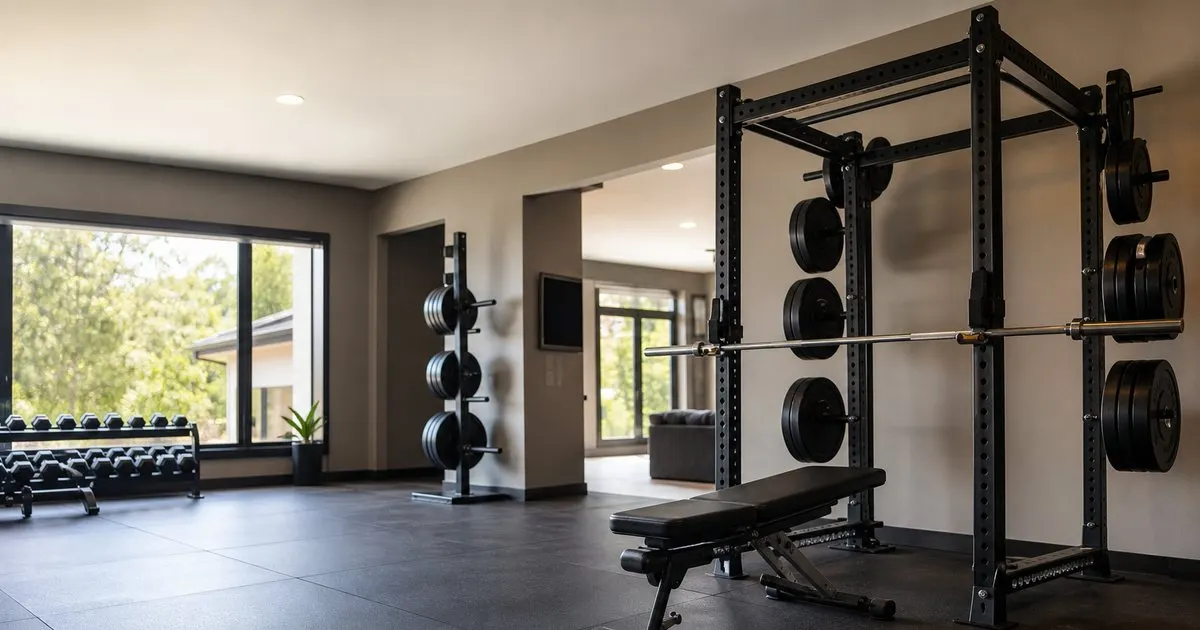
How much floor space does a complete luxury home gym require?
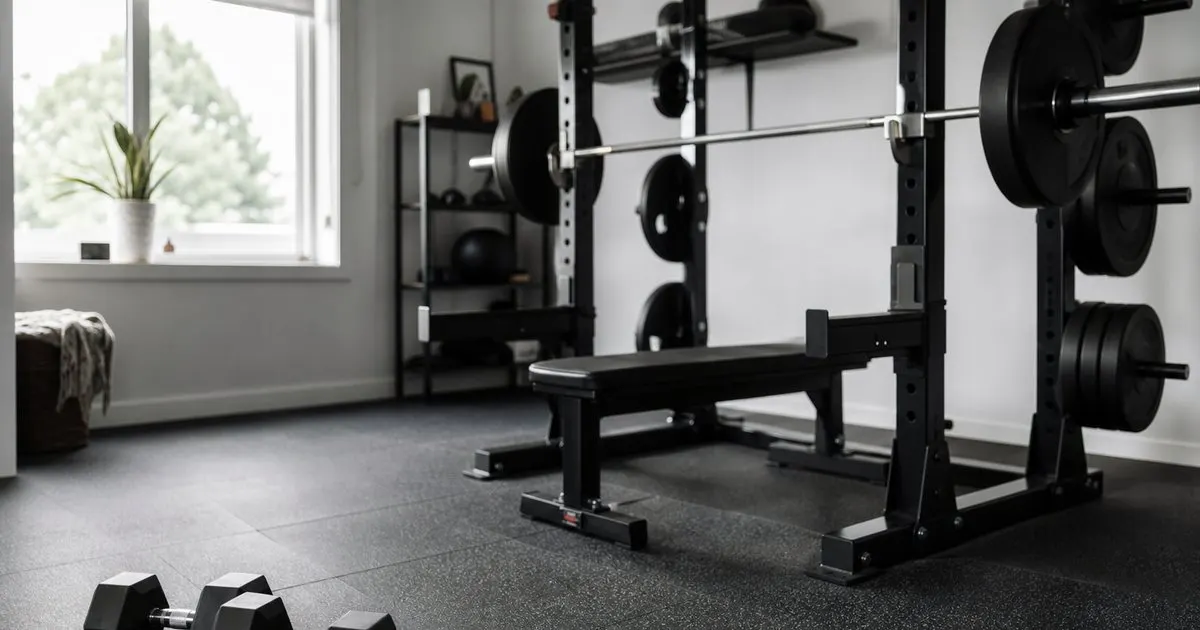
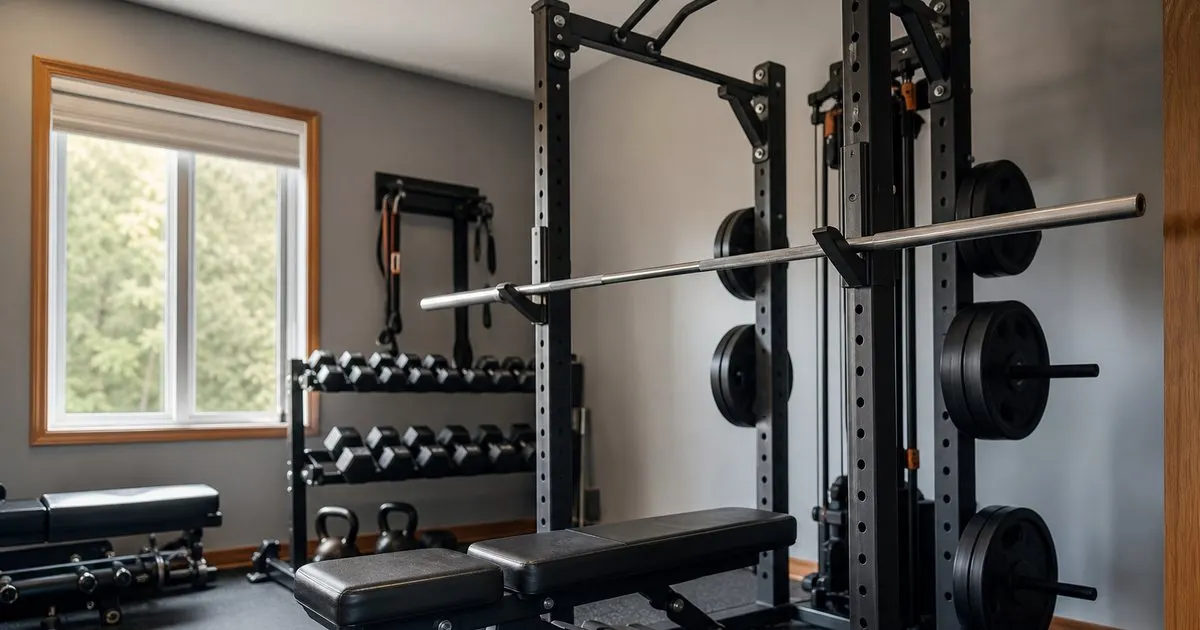
What equipment forms the foundation of a serious home gym?
Get the complete luxury home gyms guide
Our full buying guide, the price guide, and new research as we publish it. One email, no spam, unsubscribe any time.