Which flooring protects both your equipment and your foundation best?
Flooring is the unglamorous choice that saves everything above it. Here is what to look for.
Quality rubber flooring protects best, absorbing impact to shield your foundation from dropped loads, cushioning your joints, and deadening the noise and vibration that matter in a home. Thickness and density should match how you train, with heavier lifting calling for thicker, denser rubber. It is the unglamorous choice that saves everything above it.
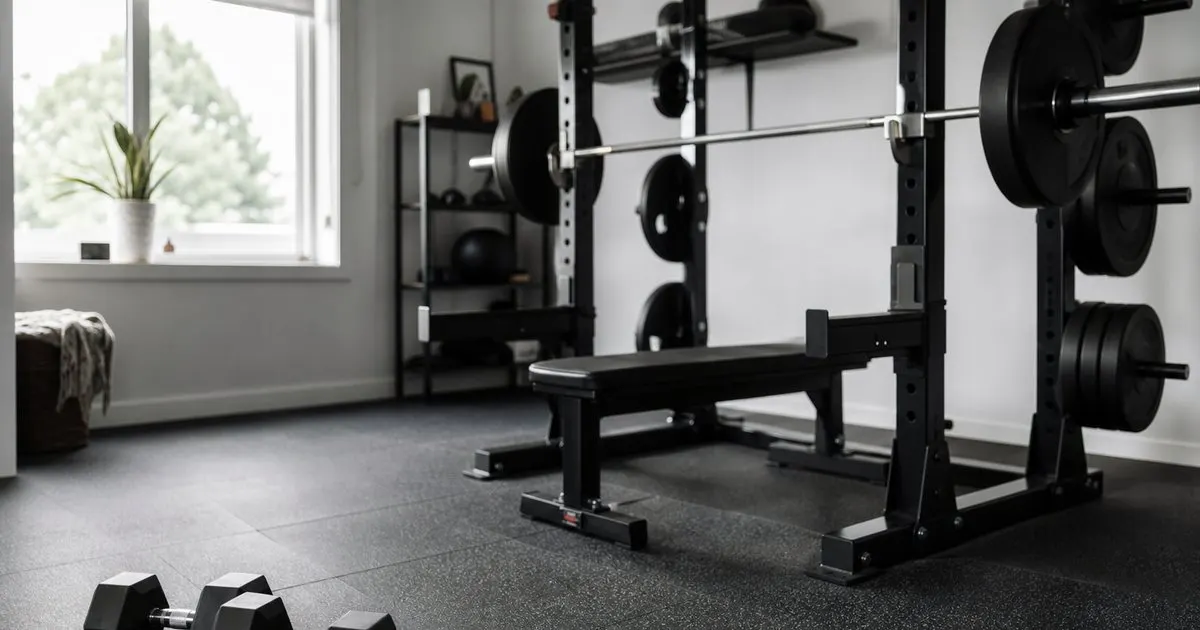
Why flooring matters
Gym flooring protects your foundation from dropped loads, shields equipment from damage, and cushions your joints. It is the unglamorous choice that quietly saves everything above it. Related: What equipment forms the foundation of a serious home gym?
Skimp here and you risk cracked slabs, damaged equipment, and a harsh, noisy room. Good flooring is foundational in every sense.
Keep reading: How much floor space does a complete luxury home gym require?, What equipment forms the foundation of a serious home gym?, How important is ceiling height when planning a home gym?. See how Gymholm helps you the expert guide to designing a premium home gym.
Rubber as the standard
Quality rubber flooring is the standard for good reason. It absorbs impact, resists wear, deadens noise, and protects both the structure below and the equipment above. Related: Why does ventilation matter as much as equipment in a home gym?
Thickness and density matter. Heavier lifting and dropped loads call for thicker, denser rubber to absorb the force without transmitting it to the slab.
Noise and vibration
In a home, noise and vibration matter far more than in a commercial gym. Good flooring dampens the thud of loads and keeps training from disturbing the rest of the house. Related: How much soundproofing does a home gym need to protect the rest of the house?
This is often overlooked until the first heavy session. Flooring that controls sound and vibration is what makes a home gym livable for everyone in the house. Related: Which mirror placement makes a home gym feel larger without becoming a distraction?
Matching floor to training
Match the flooring to how you train. Serious lifting wants dense, thick rubber, while lighter training may need less. The floor should suit the loads it will meet.
A little more investment in flooring pays back in protected structure, quieter sessions, and equipment that lasts. It is rarely the place to economize.
- Flooring protects the foundation, equipment, and your joints
- Quality rubber is the standard for impact and wear
- Thickness and density should match the loads you lift
- Good flooring dampens noise and vibration in a home

Julien Jimenez
Julien Jimenez is an independent software builder based in Paris. He designs, ships, and operates focused SaaS products for small businesses and independent professionals. Read the full author page.
Frequently asked questions
Is rubber flooring really necessary?
For any serious training, yes. Rubber absorbs impact, protects the foundation and equipment, and deadens noise and vibration. In a home, that sound control is as valuable as the protection.
How thick should the flooring be?
It depends on your training. Heavier lifting and dropped loads call for thicker, denser rubber to absorb the force. Lighter training needs less, so match the floor to the loads it will meet.
Your Training, Steps From the Bedroom
The expert guide to designing a premium home gym. Gymholm is built to help you put this into practice.
Plan your gymMore from the Gymholm blog
How much floor space does a complete luxury home gym require?
What equipment forms the foundation of a serious home gym?
How important is ceiling height when planning a home gym?
Get the complete luxury home gyms guide
Our full buying guide, the price guide, and new research as we publish it. One email, no spam, unsubscribe any time.