What should a homeowner do when premium gym equipment will not fit through the doorway or stairwell?
The most expensive mistake in a home gym build is discovering an access problem after the freight truck arrives. Measuring the route, buying the right delivery service, and knowing the escalation options turns a crisis into a scheduling detail.
Measure the Delivery Path Before You Measure the Room
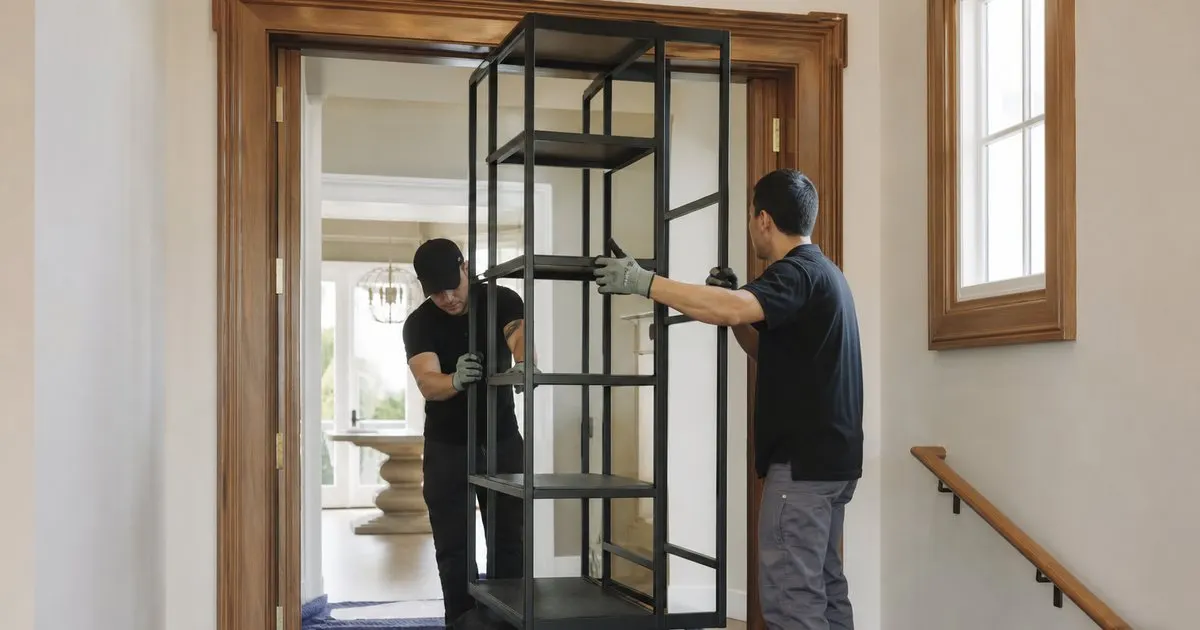
Most owners plan a gym around the finished room and discover the problem only when a pallet is sitting in the driveway. The constraint that matters is not the room at all, it is the tightest point along the entire route from the truck to the final position. Walk that route with a tape measure and record the narrowest doorway width with the door slab still in place, the clear height under every beam and threshold, the width of each stair run, and the swing space on every landing. Half an inch of casing trim can be the difference between a smooth carry and a return shipment.
Pay particular attention to turns, because they are where plans fail. A long item such as a rack upright or a treadmill deck does not travel around a ninety degree landing the way a specification sheet suggests. The usable figure is diagonal clearance at the turn, which depends on the ceiling height above the landing as much as on the width of the hall. Elevators impose their own limits: cab depth, door opening, and a fixed interior diagonal for anything that cannot be tilted. Photograph each pinch point, keep every number in one document, and dealers can answer honestly instead of guessing on your behalf. Related: How important is ceiling height when planning a home gym?
Keep reading: How much floor space does a complete luxury home gym require?, Which flooring protects both your equipment and your foundation best?, What equipment forms the foundation of a serious home gym?. See how Gymholm helps you the expert guide to designing a premium home gym.
Understand What the Freight Terms Actually Include
Heavy fitness equipment ships by freight rather than parcel, and the service level is a separate decision from the purchase itself. Curbside delivery means exactly what it says: the driver lowers the pallet at the end of the driveway and departs. Threshold service moves it just inside the first door or into the garage. Room of choice, usually marketed as white glove, is the level most buyers at this price point actually want, because it covers the carry to the final location, assembly, and removal of packaging. The upgrade is priced separately far more often than people expect, so request it as a written line item rather than assuming it is bundled. Related: Should you prioritize free weights or connected machines in a home gym?
Confirm the details before the order is placed, not after. Useful questions include whether the truck carries a liftgate, how many people will be on the crew, whether stairs are permitted and at what surcharge, how many flights are covered, and what happens if the crew arrives and judges the access unsafe. Ask as well who is responsible if a wall corner or a stair nosing is damaged during the carry. Reputable dealers answer all of this plainly, and the quality of the answer usually tells you more about the company than any specification sheet will.
Disassembly, Hoisting, and the Genuine Last Resorts
Before concluding that a piece cannot fit, find out how far it breaks down. Many premium racks, functional trainers, and cable towers arrive as flat components and are built in the room, which turns an intimidating machine into a series of manageable pieces that one person can carry. Cardio equipment is less forgiving: treadmill frames and decks are often a single welded assembly, and the console or handrails may be the only parts that come off. Ask the dealer for the crated dimensions and the largest single component dimension, because those two numbers are rarely the same and only one of them decides whether the delivery succeeds.
When the route is still too tight, the practical fixes escalate in a predictable order. Remove the door slab, and the casing if necessary, which typically buys an inch or two on each side. Take off a stair handrail and reinstall it afterward. Bring the item in through a patio door, a walkout basement, or a pair of French doors that open far wider than any interior passage. For genuinely oversized pieces, professional riggers can hoist through a window opening or a temporarily removed panel, the same approach used routinely for pianos and safes. It costs real money and requires a licensed, insured crew, but it is still far cheaper than redesigning the room. Related: When should you bring in a designer for your home gym?
Sequence the Install and Protect the House
Order of operations saves both money and finishes. Flooring goes in first, because rolling a loaded pallet jack across new rubber is much easier than lifting an assembled rack to slide tiles underneath it later. Anchored items such as racks and lifting platforms come next, followed by heavy cardio, with mirrors and glass installed last so nothing is carried past them. If a sauna cabin, cabinetry, or custom millwork forms part of the plan, coordinate those deliveries with the equipment crew, since two trades competing for the same doorway on the same morning tends to end badly for at least one of them. Related: Which flooring protects both your equipment and your foundation best?
Protect the route before anyone lifts anything. Hardboard or heavy moving blankets over finished floors, corner guards on door casings, and a genuinely clear path with rugs and furniture removed will prevent most of the damage that happens on delivery day. Concentrated wheel loads deserve thought as well, since an assembled machine on a dolly puts far more pressure per square inch on a floor than the same machine standing on its own feet. Finally, inspect every crate before signing anything. Note damage on the delivery paperwork at the moment it is found, because claims raised days later are considerably harder to resolve.
- The tightest point along the route decides what fits, not the dimensions of the finished room.
- Diagonal clearance at stair landings and inside elevator cabs is the measurement buyers forget most often.
- Buy room of choice delivery as a written line item, with stairs, flights, and crew size specified.
- Install flooring first, glass and mirrors last, and note any crate damage before signing for the shipment.

Julien Jimenez
Julien Jimenez is an independent software builder based in Paris. He designs, ships, and operates focused SaaS products for small businesses and independent professionals. Read the full author page.
Your Training, Steps From the Bedroom
The expert guide to designing a premium home gym. Gymholm is built to help you put this into practice.
Plan your gymMore from the Gymholm blog
How much floor space does a complete luxury home gym require?
What equipment forms the foundation of a serious home gym?
Get the complete luxury home gyms guide
Our full buying guide, the price guide, and new research as we publish it. One email, no spam, unsubscribe any time.