When should you service premium home gym equipment to protect a five-figure investment?
Premium equipment fails slowly and then all at once. A simple service calendar keeps a five-figure gym feeling new and keeps the warranty intact.
The weekly and monthly routine that prevents most failures
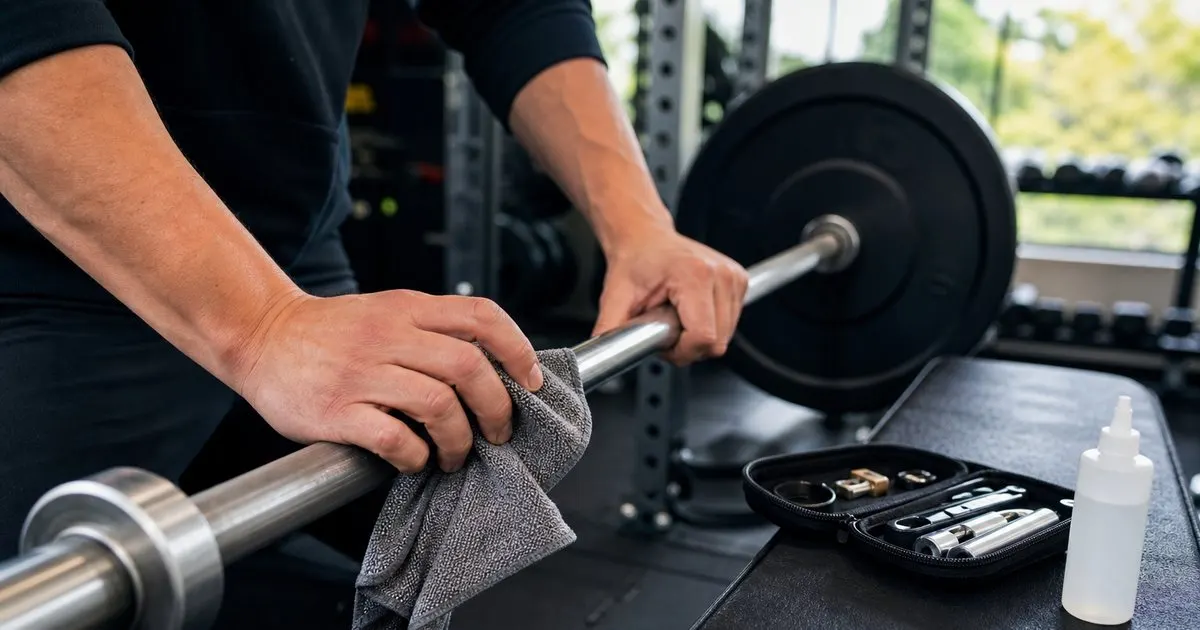
Sweat is mildly corrosive, chalk is abrasive, and dust settles into anything that moves. The weekly job is simple: wipe every touched surface with a cloth and a mild cleaner, brush chalk out of barbell knurling, and run a hand along each cable looking for frays. Monthly, go a step further: check that rack bolts, bench hardware, and pulley mounts are snug, listen for new noises on each cardio machine, and vacuum around and under motorized equipment where dust gathers near the electronics. Related: Which cardio machine deserves the prime position in a luxury home gym?
Keep a small kit within reach: a nylon brush, microfiber cloths, a set of hex keys that fit your rack, the lubricant your treadmill manufacturer specifies, and a light machine oil for pivots. When the tools live in the gym, the tasks get done. A card on the wall or a note in your training app listing the monthly checks turns maintenance from a vague intention into a fifteen-minute habit.
Keep reading: How much floor space does a complete luxury home gym require?, Which flooring protects both your equipment and your foundation best?, What equipment forms the foundation of a serious home gym?. See how Gymholm helps you the expert guide to designing a premium home gym.
Cardio machines: where the motor and belt tell you the truth
Treadmills are the most demanding pieces to maintain and the most expensive to neglect. The belt and deck need lubrication at the interval and with the product the manufacturer specifies, since running a dry belt raises motor load and wears the deck. Check belt alignment and tension every month; a belt that drifts or slips is asking for adjustment, not replacement. Keep the motor compartment clear of dust with a vacuum, never compressed air, which drives debris deeper.
Rowers, bikes, and climbers are gentler. A chain-driven rower wants a light oil on the chain periodically and an occasional check of the seat rollers; a belt-driven machine wants little more than cleaning and an ear for squeaks. Bikes benefit from checking pedal and crank tightness and, on magnetic or electronic resistance units, keeping the console dry and dust-free. Any connected machine should have its firmware updated when prompted, since manufacturers often correct motor and resistance behavior through software. Related: Should you prioritize free weights or connected machines in a home gym?
Strength equipment: cables, bars, and the bench
Cables are the wear item on a functional trainer or a rack-mounted pulley. Inspect their full length monthly, paying attention to where they pass over pulleys and enter the terminations, and replace a cable at the first visible fraying rather than waiting for it to fail under load. Pulleys should spin freely and silently; a rough bearing is an early warning. Weight stack guide rods want a wipe and a light lubricant so the stack glides rather than chatters. Related: What is the best way to choose a functional trainer for a high-end home gym?
Barbells reward simple care. Brush chalk out after heavy sessions, wipe the shaft with a light oil if the finish is bare steel, and keep the sleeves spinning by dropping a little oil into the collar gap. Store bars horizontally or in a proper vertical holder, never leaning in a corner. Benches and pads are quietly important: clean the upholstery with the manufacturer's recommended product rather than harsh sprays, check for cracking, and tighten the pad bolts, since a rocking bench is both unpleasant and unsafe.
When to call a technician and why the paperwork matters
Motorized equipment benefits from a professional service roughly once a year, or sooner if the machine sees daily use by several people. A technician will check the motor and controller, test belt tension with a gauge, calibrate incline motors, and catch the issues a homeowner cannot see. For a sauna, an annual check of the heater elements and controls is prudent, and a plunge chiller wants its filters and refrigerant loop inspected on the interval the manufacturer sets. Related: Why does a recovery zone with sauna and cold plunge belong in a luxury home gym?
Keep records. Premium warranties often require evidence of reasonable care, and a simple log with dates, tasks, and the products used strengthens any claim. Photograph serial numbers and store receipts in the same folder. Finally, resist the urge to improvise on lubricants and cleaners; using the wrong product on a treadmill deck or a vinyl pad is the fastest way to void coverage and shorten the life of a piece you paid handsomely for.
- Wipe, brush, and inspect cables weekly; check hardware and listen for new noises monthly.
- Lubricate treadmill belts on the manufacturer's interval and keep motors dust-free with a vacuum.
- Replace frayed cables immediately, oil barbell sleeves, and store bars properly.
- Book an annual professional service for motorized pieces and keep a written maintenance log.

Julien Jimenez
Julien Jimenez is an independent software builder based in Paris. He designs, ships, and operates focused SaaS products for small businesses and independent professionals. Read the full author page.
Your Training, Steps From the Bedroom
The expert guide to designing a premium home gym. Gymholm is built to help you put this into practice.
Plan your gymMore from the Gymholm blog
How much floor space does a complete luxury home gym require?
What equipment forms the foundation of a serious home gym?
Get the complete luxury home gyms guide
Our full buying guide, the price guide, and new research as we publish it. One email, no spam, unsubscribe any time.