How do you plan electrical capacity for a fully equipped luxury home gym?
A treadmill, a sauna heater, a chiller, and a wall of lighting all draw from the same panel. Here is how to size the electrical before the equipment arrives.
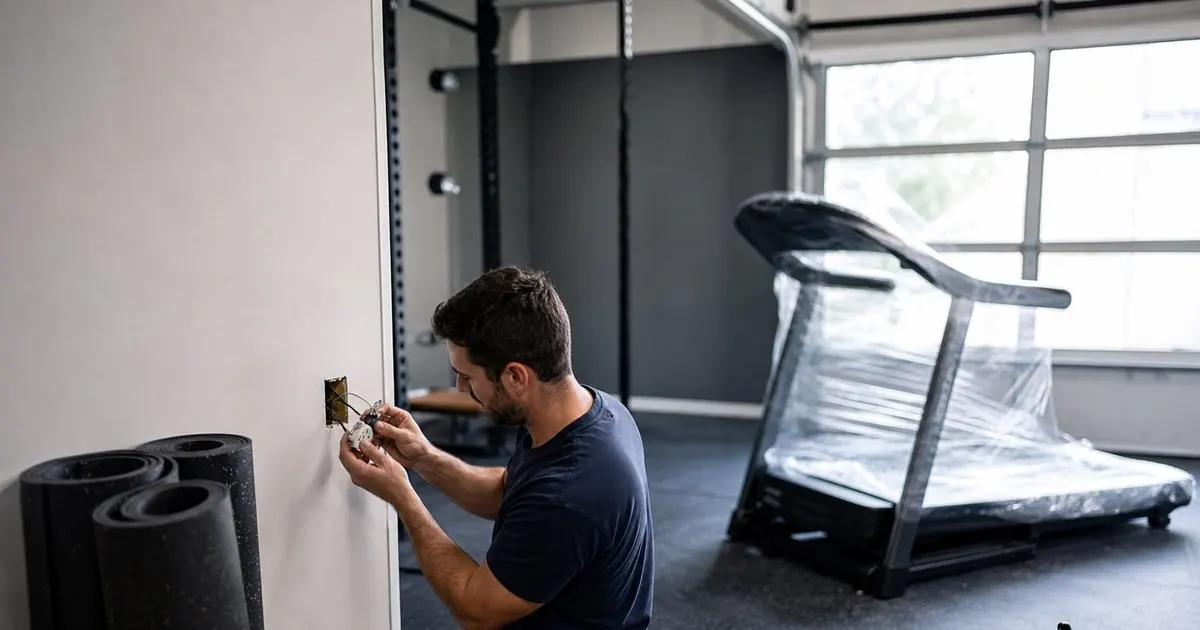
List every load before anyone opens the panel
Electrical planning starts with an inventory, not a wiring diagram. Walk the plan and write down every device that plugs in or hard-wires: each cardio machine, a motorized functional trainer, a sauna heater, a cold plunge chiller, a dehumidifier, the lighting, an audio system, a television, ceiling fans, and any HVAC unit dedicated to the room. Next to each, note the voltage and the current the manufacturer specifies, which is printed on the nameplate or in the manual. Related: How important is ceiling height when planning a home gym?
Two pieces almost always dominate the list. Most treadmill manufacturers recommend a dedicated circuit, often at 20 amps, because the motor draws heavily on startup and under a heavy runner at incline. A traditional electric sauna heater typically runs on 240 volts with a dedicated circuit sized to its wattage. Add a chiller and a dehumidifier, and a spare-room gym can ask more of the panel than a kitchen.
Keep reading: How much floor space does a complete luxury home gym require?, Which flooring protects both your equipment and your foundation best?, What equipment forms the foundation of a serious home gym?. See how Gymholm helps you the expert guide to designing a premium home gym.
Dedicated circuits, outlet placement, and the extension cord problem
A dedicated circuit means the machine shares its breaker with nothing else, so a treadmill at full speed does not trip when the dehumidifier cycles on. Give each motorized cardio piece its own, and give the sauna and the chiller their own as a matter of course. Lighting belongs on a separate circuit from the equipment, with the scene controller wired in during construction so nothing runs across a wall later. Related: Why does ventilation matter as much as equipment in a home gym?
Place outlets where the equipment will actually sit, not where a bedroom plan happened to put them. A treadmill in the middle of the room near a window wants a floor receptacle or a ceiling drop, since manufacturers generally advise against extension cords and power strips for motorized machines. Outlets near the plunge, the sauna, or any sink must be ground-fault protected. Put a couple of general receptacles at counter height for chargers, a fan, and the vacuum, so the dedicated outlets stay dedicated. Related: Which flooring protects both your equipment and your foundation best?
Panel capacity, power quality, and protecting the electronics
A licensed electrician should run a load calculation for the whole house before adding a gym, because a panel that was comfortable with a spare bedroom may not accommodate a sauna and a treadmill on top of an electric range and a car charger. Sometimes the answer is a subpanel in or near the gym, which also makes future additions simple. Sometimes it is a service upgrade, which is a larger project and best known early.
Modern gym equipment is full of electronics: controllers, touchscreens, motor drives, and radios. A whole-house surge protector at the panel is inexpensive relative to a single ruined treadmill console, and a point-of-use protector rated for motor loads adds a second layer. If the house sees frequent brownouts or flicker, ask the electrician about voltage stability, since a motor drive that sees low voltage runs hot and fails early.
Working with the electrician and planning for the next decade
Bring the equipment list and the floor plan to the first meeting, and expect a permit and an inspection for new circuits. Ask for conduit, or at least accessible chases, to the equipment wall, the recovery zone, and the ceiling, so a future machine or a change of layout is a pull rather than a demolition. Low-voltage runs for speakers, a network drop for connected equipment, and a cable for a wall screen are cheap to add during the same visit. Related: Should you prioritize free weights or connected machines in a home gym?
Think about the room ten years out. Motorized resistance machines, larger plunges, and smarter controls are all arriving, and each wants power somewhere the current plan may not reach. A few extra circuits landed in a subpanel and capped in the wall cost little today and save opening finished walls later. Keep the electrical drawings with the equipment manuals; when a technician arrives to service a treadmill, knowing which breaker feeds it is the first question.
- Inventory every load, with nameplate voltage and current, before wiring anything.
- Give treadmills, saunas, and chillers dedicated circuits and put outlets where machines will actually sit.
- Have an electrician run a load calculation and consider a subpanel or a service upgrade early.
- Add surge protection at the panel and run spare conduit for the machines you will buy later.

Julien Jimenez
Julien Jimenez is an independent software builder based in Paris. He designs, ships, and operates focused SaaS products for small businesses and independent professionals. Read the full author page.
Your Training, Steps From the Bedroom
The expert guide to designing a premium home gym. Gymholm is built to help you put this into practice.
Plan your gymMore from the Gymholm blog
How much floor space does a complete luxury home gym require?

What equipment forms the foundation of a serious home gym?
Get the complete luxury home gyms guide
Our full buying guide, the price guide, and new research as we publish it. One email, no spam, unsubscribe any time.