How much soundproofing does a home gym need to protect the rest of the house?
Dropped plates and treadmill footfall travel through a house in ways music never does. Here is how to decide what level of isolation your gym actually needs.
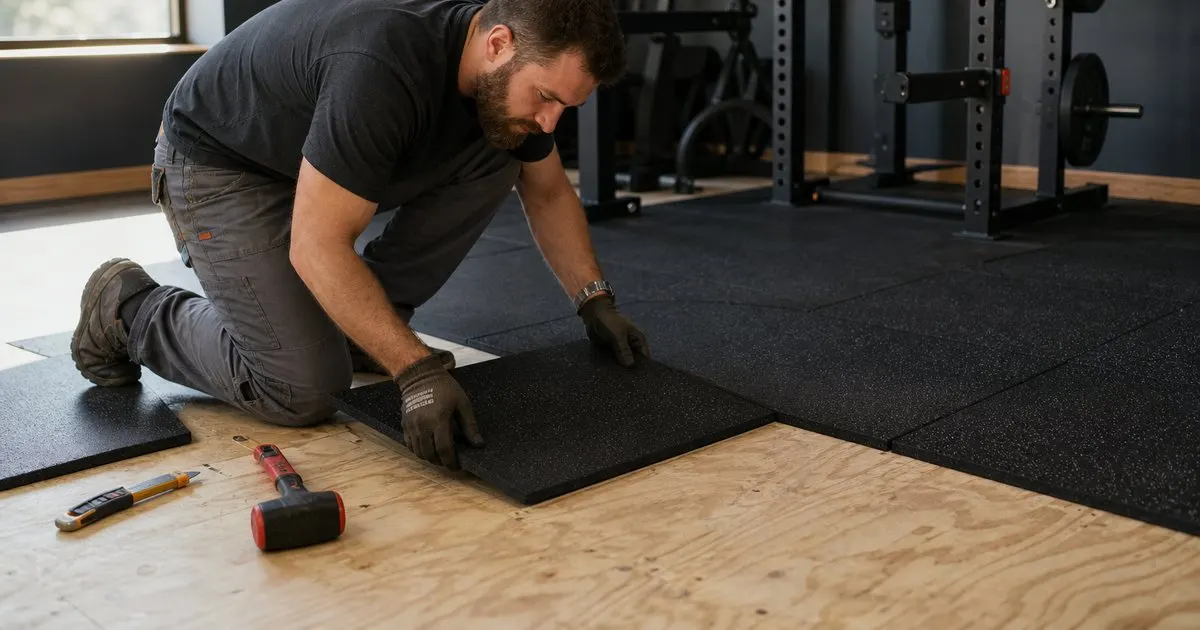
Two kinds of noise, and only one is easy
Airborne sound is what most people picture: music, a fan, the whir of a bike flywheel. It travels through the air, hits a wall, and is reduced by mass and sealing. A solid-core door with seals, a second layer of drywall, and insulation in the wall cavity typically handle it well. Structure-borne sound is the other kind, and it is the one that ruins the peace of a house. A deadlift lockout, a dropped dumbbell, or a heavy runner on a treadmill sends energy directly into the floor, which carries it through joists and studs into rooms that share no wall with the gym.
The distinction matters because the fixes are different. Adding drywall does almost nothing for a plate hitting the floor. Isolation for structure-borne noise comes from breaking the physical path with resilient layers: dense rubber, decoupled framing, and, in serious cases, a floating floor. Before spending anything, work out which kind of noise you are fighting and who is on the other side of it.
Keep reading: How much floor space does a complete luxury home gym require?, Which flooring protects both your equipment and your foundation best?, What equipment forms the foundation of a serious home gym?. See how Gymholm helps you the expert guide to designing a premium home gym.
Where the gym sits decides how much you need
A basement on a concrete slab is the easiest case. The slab absorbs impact, there is nobody below, and a good rubber floor over a thin underlayment usually keeps the rest of the house comfortable. A ground-floor room over a crawlspace, or a garage with living space above, is harder, because the floor framing acts as a drum. A second-floor room over bedrooms is the hardest, and the honest answer there is that heavy dropping is off the table without a serious floating assembly. Related: How much floor space does a complete luxury home gym require?
Think in tiers rather than a single number. Light use, meaning cardio, cables, and controlled dumbbell work, needs rubber flooring and a decent door. Moderate use with barbells lifted and lowered under control needs a thicker rubber layer, a dedicated platform, and attention to the wall assembly. Heavy use with loaded drops needs a platform on its own isolation layer, often a sandwich of rubber, plywood, and more rubber, and ideally a location with nothing sensitive beneath it.
Floors, walls, ceilings, and the door
The floor does most of the work. A typical high-performance build layers a rubber underlayment on the subfloor, a plywood layer to spread load, and a thick rubber top surface, with an even heavier platform under the rack. The platform is where drops happen, so it can be denser and thicker than the rest of the room without making the whole floor feel like a tire. Walls benefit from a second layer of drywall with a damping compound between the sheets, insulation in the cavity, and, where the gym shares a wall with a bedroom or office, resilient channel or clips that decouple the drywall from the studs. Related: Which mirror placement makes a home gym feel larger without becoming a distraction?
Ceilings only need attention when there is living space above. Decoupling the ceiling below the gym is possible but means opening that ceiling, so it is far cheaper during a renovation than after. The door is the weak point everyone forgets: a hollow-core door with a gap at the floor undoes an expensive wall. Specify a solid-core door, perimeter seals, and an automatic drop seal at the bottom. Finally, route any ducts so they do not become a straight pipe carrying sound from the gym into the hallway.
Treating the room itself so it is pleasant to train in
Isolation keeps noise from leaving; acoustic treatment shapes the sound inside. A room full of hard surfaces, rubber floor, mirror wall, drywall, and steel, is unpleasantly live, with every clank ringing for a moment too long. A few thick absorptive panels on the wall opposite the mirror, a fabric-wrapped ceiling cloud over the cardio zone, or acoustic plaster on one surface takes the edge off without changing the look. Related: How important is ceiling height when planning a home gym?
Equipment choices reduce the problem at its source. Bumper plates instead of iron, a rower and bike instead of a second treadmill, and rubber-coated dumbbells all lower the peak noise before any construction is involved. A treadmill on its own isolation mat, placed away from shared walls, is often the single most effective change for a household that hears footfall. Spend on the floor and the door first, treat the room second, and consider the walls only where a neighbor or a bedroom sits on the other side. Related: Which flooring protects both your equipment and your foundation best?
- Separate airborne noise from structure-borne impact; the second one needs isolation, not just mass.
- A basement slab needs the least isolation, a second floor over bedrooms the most.
- Build the floor in layers with a denser platform under the rack, and upgrade the door.
- Add absorption inside the room and choose quieter equipment to lower noise at the source.

Julien Jimenez
Julien Jimenez is an independent software builder based in Paris. He designs, ships, and operates focused SaaS products for small businesses and independent professionals. Read the full author page.
Your Training, Steps From the Bedroom
The expert guide to designing a premium home gym. Gymholm is built to help you put this into practice.
Plan your gymMore from the Gymholm blog
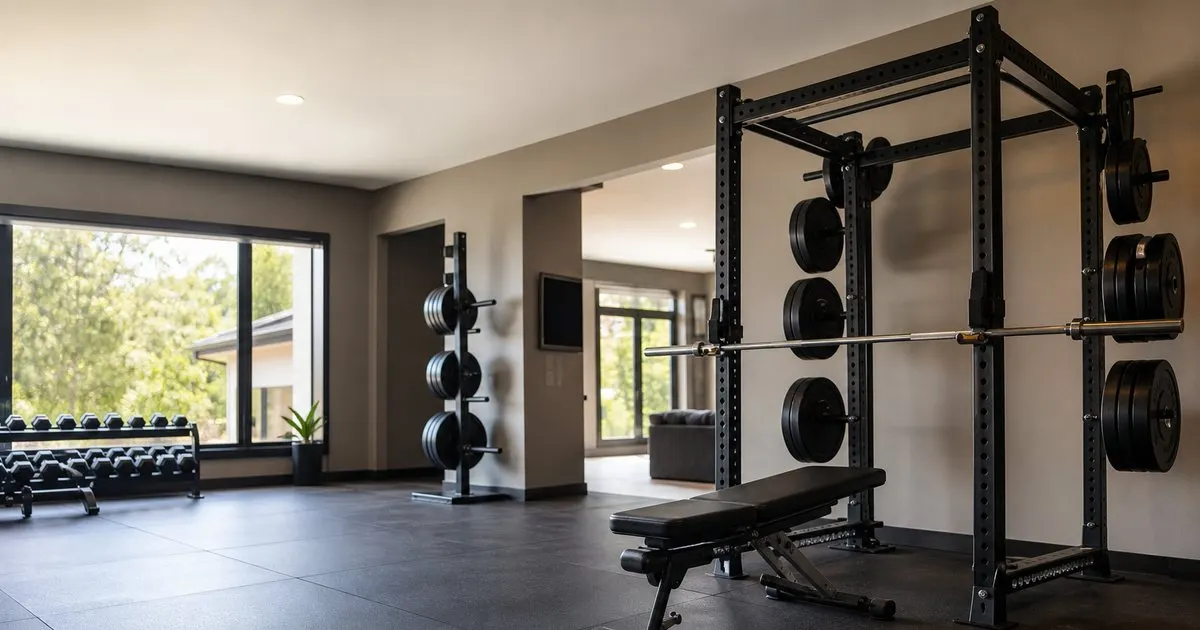
How much floor space does a complete luxury home gym require?
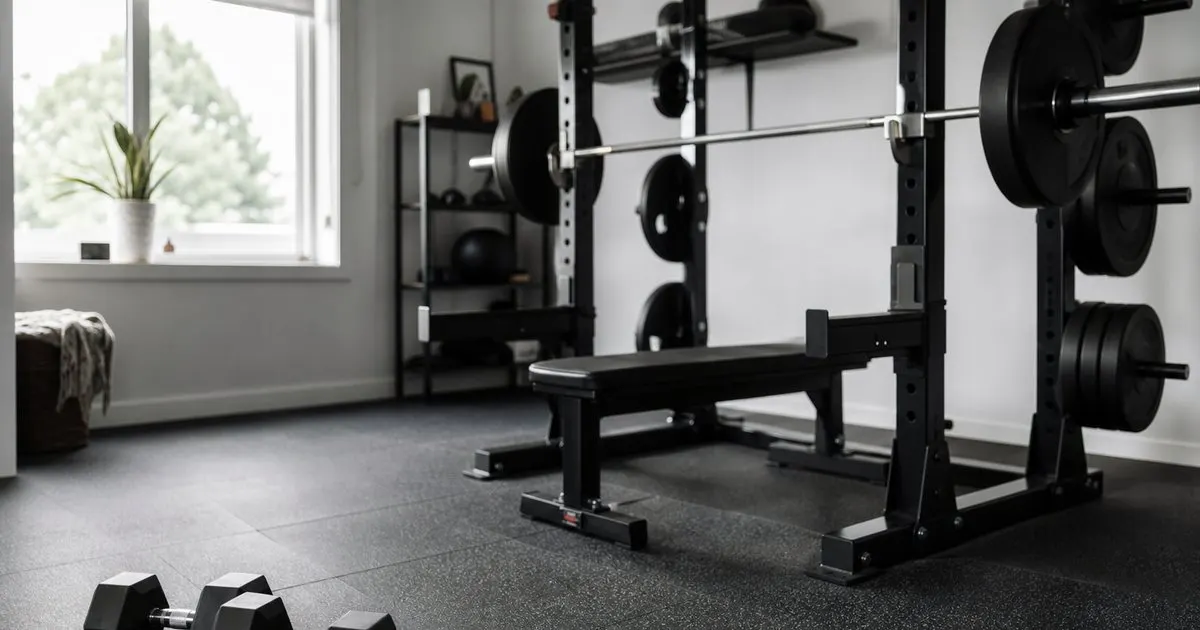
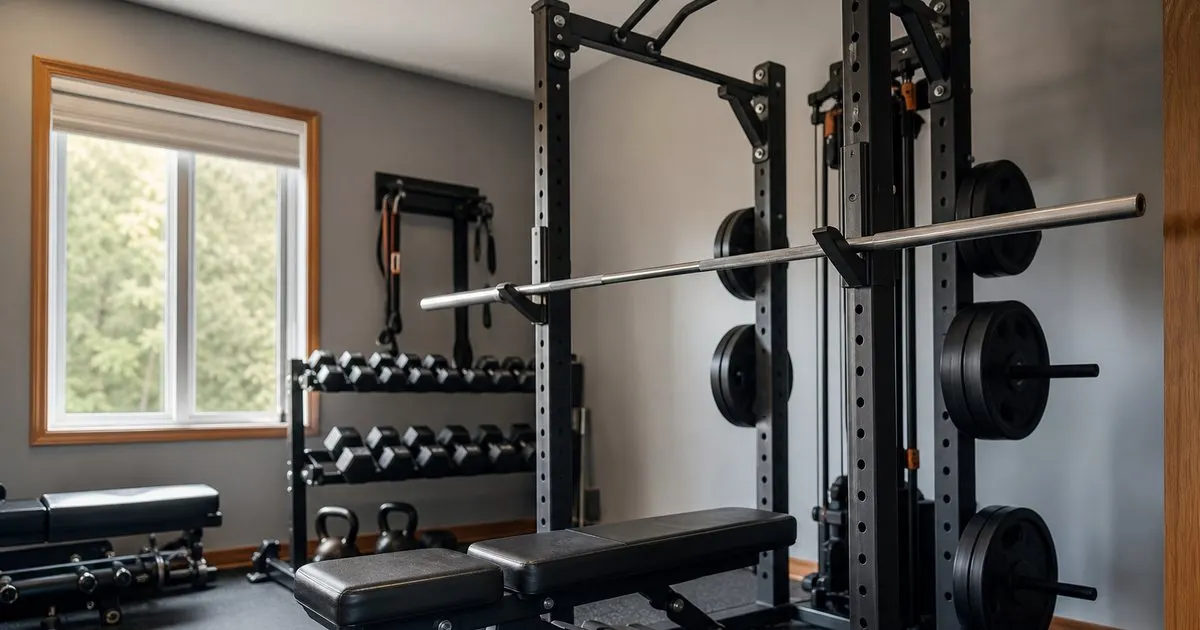
What equipment forms the foundation of a serious home gym?
Get the complete luxury home gyms guide
Our full buying guide, the price guide, and new research as we publish it. One email, no spam, unsubscribe any time.