How do you light a luxury home gym so it feels like a private studio?
Lighting decides whether a home gym reads as a boutique studio or a converted storage room. Here is how to layer it properly and where the budget belongs.
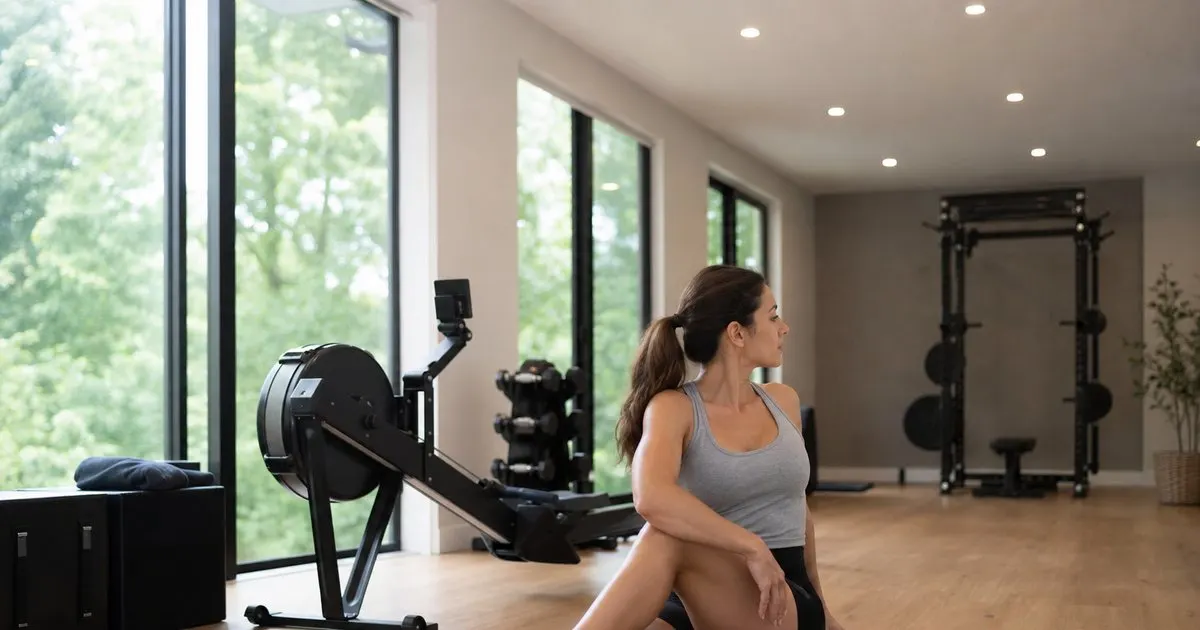
Start with the three layers every good studio uses
Ambient light is the even wash that keeps every corner of the floor readable, so a loaded barbell or a stray kettlebell never sits in shadow. Task light is the concentrated layer over the places where precision matters: the rack, the bench, the stretching area, and the mirror wall. Accent light is the layer most homeowners skip, and it is the one that separates a serious room from a tidy garage. A grazing fixture on a stone or slatted wood wall, a slim linear strip beneath a floating equipment shelf, or a single pendant over a mobility corner gives the eye somewhere to rest. Related: How much floor space does a complete luxury home gym require?
Each layer belongs on its own dimmer, ideally tied to a keypad with preset scenes. A heavy squat session wants the room bright and cool. An evening mobility session wants it warm and low, with the accent layer doing most of the work. Nobody adjusts three separate dimmers between sets, so scenes with names like Train, Recover, and Clean are the difference between a system that gets used and one that stays at full brightness forever.
Keep reading: How much floor space does a complete luxury home gym require?, Which flooring protects both your equipment and your foundation best?, What equipment forms the foundation of a serious home gym?. See how Gymholm helps you the expert guide to designing a premium home gym.
Color temperature and rendering matter more than raw brightness
Most designers land somewhere between 3500 and 4000 Kelvin for training zones, which reads as crisp without tipping into the blue cast of a warehouse. Recovery and stretching areas typically sit warmer, around 2700 to 3000 Kelvin. What you should avoid is mixing temperatures within a single sightline, because the eye notices a warm pendant beside a cool downlight even when it cannot name the problem. Color rendering deserves equal attention. Fixtures with a high color rendering index, generally 90 or above, make skin, wood, and stone look the way they do in daylight, which matters in a room where you spend a great deal of time looking at yourself in a mirror. Related: Which mirror placement makes a home gym feel larger without becoming a distraction?
Tunable white fixtures, which shift temperature on a schedule or by scene, earn their premium in a gym that gets used at both ends of the day. Flicker is the quieter problem. Some inexpensive LED drivers pulse at frequencies the eye does not consciously register but that show up as banding in form videos and as fatigue over a long session. Ask for flicker-free drivers by name, and if you record your lifts, test a sample fixture with your phone camera before committing to a full order.
Placement around mirrors, racks, and cardio
A row of downlights hugging a mirror wall creates hot spots on the glass and deep shadows under the brow and cheekbones. Pull the fixtures out from the wall by a couple of feet and let the light bounce, or wash the wall from a ceiling cove with a continuous linear source. Under a power rack, a single downlight centered on the uprights puts your own head between the light and the bar. Two fixtures, one fore and one aft of the rack, solve it and give clean sightlines for watching bar path.
Cardio placement interacts with windows more than any other zone. A treadmill or bike facing east is glorious at dawn and blinding at sunset, so plan motorized shades or angle the machine off axis. Anything that hangs, including pendants and track heads, should stay clear of the overhead press path and the top of a pull-up bar. Recessed fixtures with an impact-rated trim belong over lifting platforms, and a guard over any exposed lamp is cheap insurance in a room where plates travel. Related: How important is ceiling height when planning a home gym?
Daylight, controls, and where the money should go
If the room has windows or a skylight, treat daylight as the primary source and let the electric layers fill in around it. Daylight is also the most honest light for judging form and for photographing the space. Motorized shades on a schedule keep the afternoon glare out without anyone thinking about it, and a skylight in a garage conversion changes the character of the room more than any single fixture can.
In a five-figure gym, lighting typically claims a modest share of the budget, but the sequencing matters more than the number. Recessed fixtures need ceiling access, so decide the layout during construction rather than after the drywall closes. A standalone scene keypad is usually enough; whole-home integration is pleasant but not required. Spend on drivers, dimmers, and rendering quality, since those determine how the room feels every day. Save on decorative fixtures, which can be swapped later without opening a wall. Related: Why does ventilation matter as much as equipment in a home gym?
- Layer ambient, task, and accent light on separate dimmers with named scenes.
- Keep training zones around 3500 to 4000 Kelvin and choose fixtures with high color rendering.
- Pull downlights away from mirror walls and light a rack from two sides, not one.
- Decide the recessed fixture layout before drywall closes, and spend on drivers rather than decor.
Julien Jimenez
Julien Jimenez is an independent software builder based in Paris. He designs, ships, and operates focused SaaS products for small businesses and independent professionals. Read the full author page.
Your Training, Steps From the Bedroom
The expert guide to designing a premium home gym. Gymholm is built to help you put this into practice.
Plan your gymMore from the Gymholm blog
How much floor space does a complete luxury home gym require?
What equipment forms the foundation of a serious home gym?
Get the complete luxury home gyms guide
Our full buying guide, the price guide, and new research as we publish it. One email, no spam, unsubscribe any time.